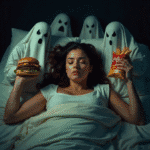


Sleepmaxxing is the practice of obsessively optimizing every variable that affects sleep — from light and temperature to supplements and bedtime rituals.
The trend has exploded on TikTok with 125M+ posts, driven largely by Gen Z and millennials treating sleep as a performance metric.
Some sleepmaxxing habits — consistent wake times, cool dark bedrooms, morning sunlight — are strongly supported by sleep science.
Others, like mouth taping and extreme supplement stacking, carry real risks and lack solid evidence.
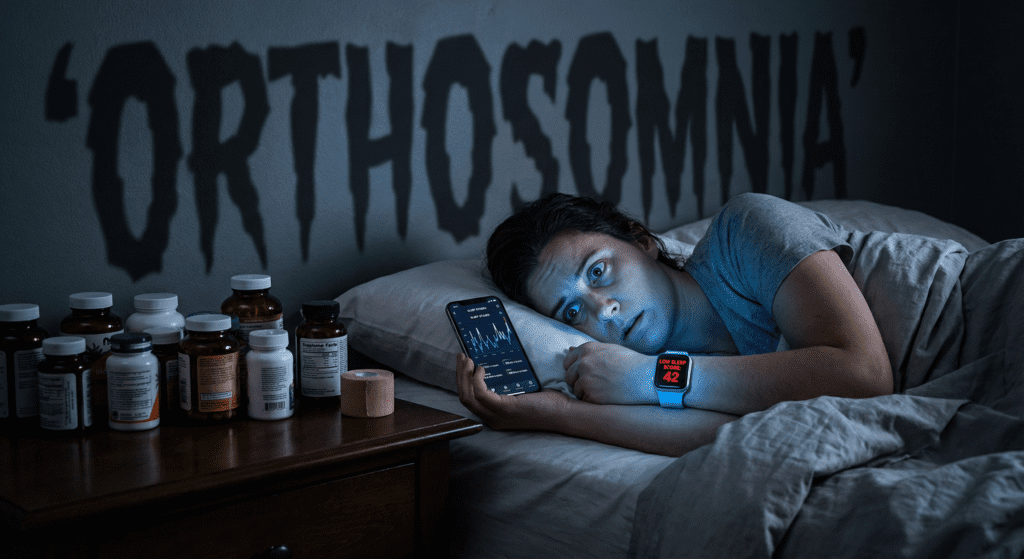
The danger isn’t caring too much about sleep — it’s that obsession can trigger orthosomnia: sleep anxiety caused by sleep optimization itself.
This guide separates what genuinely works from what wastes your time (or harms your health), and helps you build a routine for your real life.
Table of Contents
Introduction
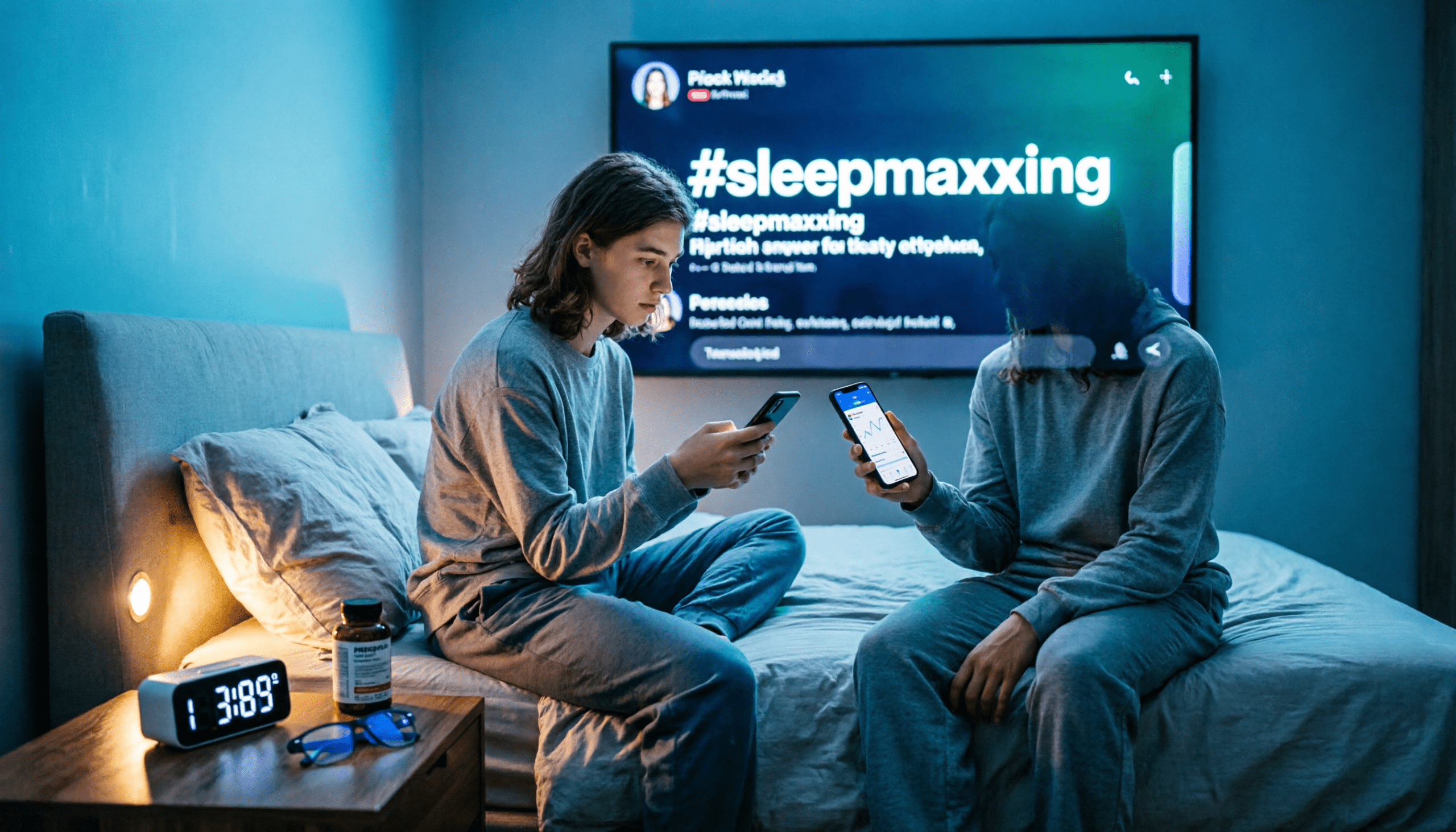
If you’ve scrolled TikTok or Instagram in the past year, you’ve probably encountered someone filming their elaborate nighttime routine — blackout curtains descending like theater drapes, a precisely calibrated white noise machine, mouth tape ceremoniously applied, and a cocktail of supplements lined up on the nightstand like chess pieces. Welcome to sleepmaxxing, the internet’s most obsessive wellness trend.
But here’s the thing: behind all the aesthetic bedroom footage and affiliate links, there’s a genuinely important question buried underneath. Can you actually engineer better sleep?
The answer is more nuanced than any 60-second video will tell you — and more hopeful than most people expect. Some of what you see online is decades-old sleep science repackaged in good lighting. Some of it is marketing dressed up as medicine. And some of it is genuinely dangerous advice spreading faster than the research disproving it.
This guide is for the person who’s tried “just going to bed earlier” and knows it’s not that simple. We’ll walk through what sleepmaxxing actually means, what the science supports, what to avoid, and how to build a routine that fits your real life — not someone else’s TikTok fantasy.
1. What Is Sleepmaxxing?
Sleepmaxxing is the practice of systematically optimizing every controllable factor that influences sleep quality, duration, and consistency. The term borrows the “-maxxing” suffix from internet culture — where it signals taking something to its logical extreme — applied here to the pursuit of perfect sleep.
Unlike casual sleep hygiene tips (“try to go to bed at the same time each night”), sleepmaxxing treats sleep as a multi-variable system. Practitioners adjust their bedroom environment, diet, light exposure, body temperature, supplementation, and even social schedules — all in the name of maximizing every hour spent asleep.
At its best, sleepmaxxing is just evidence-based sleep optimization with a catchy name. At its worst, it becomes a compulsive, anxiety-inducing fixation that ironically makes sleep harder. Sleep researchers have coined a term for that dark side: orthosomnia — the obsession with achieving perfect sleep, often fueled by wearable data, that creates so much performance pressure it backfires into insomnia.
The distinction matters. This guide isn’t designed to help you achieve a perfect sleep score. It’s to help you understand which levers genuinely move the needle — and which are just noise.
2. Why Is Sleepmaxxing Trending?
Three years ago, you might have gotten a polite nod for mentioning your bedtime routine at dinner. Today, sleep optimization is a cultural movement. So what changed?
TikTok lit the fuse. The hashtag #sleepmaxxing has surpassed 125 million posts, with creators sharing everything from evidence-based tips to borderline absurd hacks. The visual, ritual-heavy nature of nighttime routines makes them perfect short-form content — satisfying to watch, easy to emulate, and endlessly remixable.
But the trend’s popularity isn’t just algorithmic luck. It reflects something deeper. A 2024 Gallup poll found that only 32% of Americans rate their sleep as “excellent” or “very good” — the lowest figure Gallup has recorded in the survey’s history. Among adults aged 18–34, a Sleep Foundation survey found that 65% rate their sleep quality as “fair” or “poor.” This is a generation that grew up glamorizing sleep deprivation and is now reckoning with the consequences: brain fog, anxiety, metabolic issues, and a general feeling of running on fumes.
The wellness industry noticed. The global sleep market is projected to reach $585 billion by 2025 (Global Wellness Institute), spanning $2,000 smart mattresses and $5 bags of chamomile tea — with marketing that rarely distinguishes between what’s evidence-based and what’s aspirational.
There’s also a deeper generational shift. Gen Z and younger millennials grew up tracking steps, calories, and screen time. Applying that same data-driven mindset to sleep feels natural — even inevitable. The result is a perfect audience for sleepmaxxing content: people who are genuinely sleep-deprived, highly motivated to improve, and already spending hours on platforms where sleep content thrives.
The question isn’t whether people should care about their sleep. They absolutely should. The question is whether the specific strategies going viral deserve your attention.
3. What Actually Works: Science-Backed Sleepmaxxing Habits
Not all sleep hacks come in aesthetically pleasing packaging. Some of the most effective strategies are unglamorous, unsexy, and completely free. Here are the ones with genuine scientific support.
3.1 Consistent Sleep and Wake Times — The Most Underrated Tool
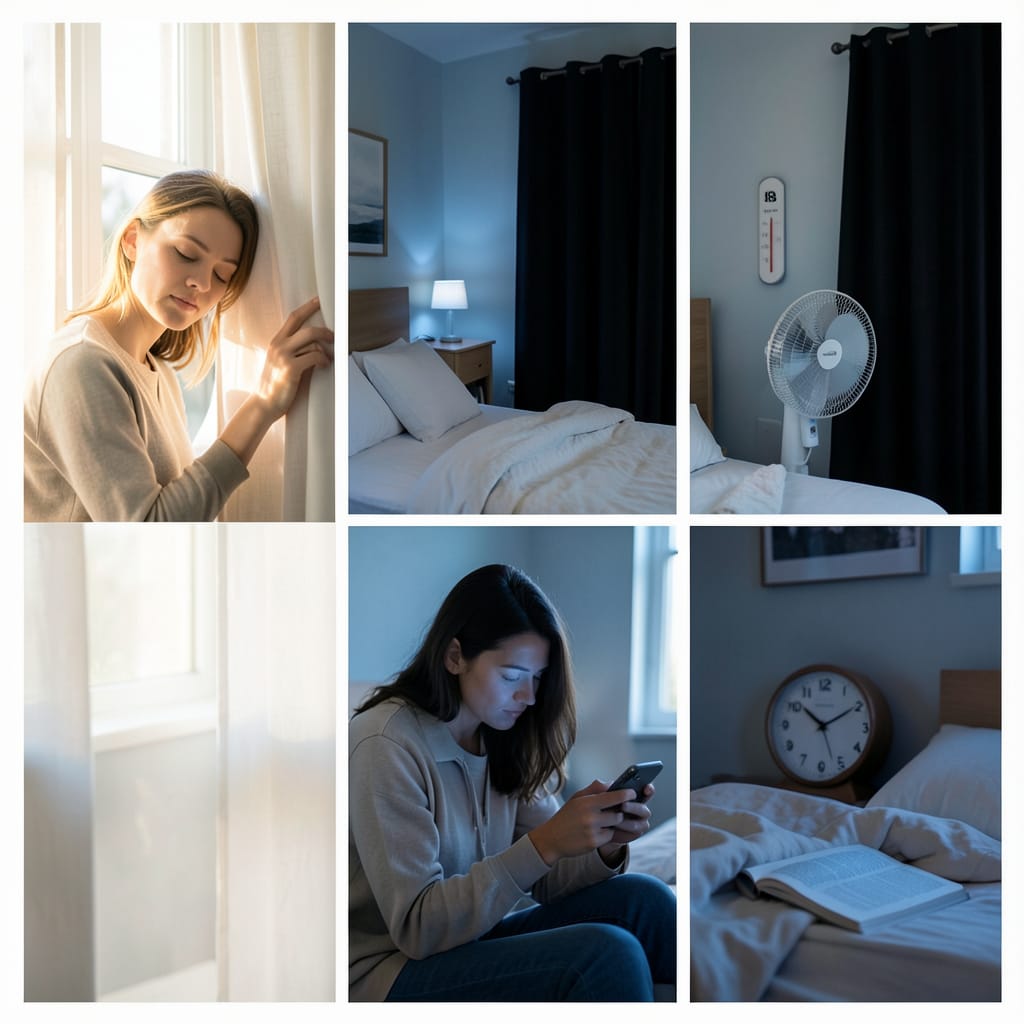
This might be the least exciting recommendation on the list, but it’s arguably the most powerful. Your circadian rhythm — the internal clock governing sleep-wake cycles — thrives on consistency. When you shift your schedule by even 90 minutes on weekends (what researchers call “social jet lag”), you’re essentially giving yourself jet lag without the vacation.
A 2019 Harvard study tracking nearly 2,000 adults found that irregular sleep timing — even among people getting enough total hours — was associated with significantly worse metabolic health and higher rates of depression and anxiety. Timing variability of more than 90 minutes was enough to produce measurable effects.
What this means practically: pick a wake-up time you can maintain seven days a week. Your body will start anticipating sleep and waking naturally. It’s boring advice. It’s also the foundation everything else is built on.
3.2 Cool Your Bedroom to 65–68°F (18–20°C)
If there’s one sleepmaxxing habit that deserves the hype, it’s temperature control. Your core body temperature needs to drop 2–3°F to initiate sleep — this isn’t optional, it’s physiological. When your room is too warm, your body struggles to shed heat, and you end up in that frustrating half-awake limbo.
A study in the Journal of Physiological Anthropology found that temperatures between 60–67°F consistently produced better sleep quality, faster sleep onset, and more time in deep sleep. The National Sleep Foundation cites the same range, noting that temperatures above 75°F significantly disrupt sleep architecture.
This explains why most people sleep better in cool seasons. Your body isn’t being picky — it’s trying to complete a biological process that depends on cooling. Even small adjustments help: a fan, breathable bedding, or sleeping with one leg outside the covers can make a measurable difference.
3.3 Light Control: Darkness as a Biological Signal
The sleepmaxxing aesthetic of blackout curtains and covered LED lights isn’t just about creating a cozy vibe — it’s biology. A landmark study from Northwestern University found that even dim light exposure during sleep was associated with increased insulin resistance and elevated heart rate. Participants didn’t report feeling less rested, but their bodies told a different story.
The relationship works in both directions. Morning bright light anchors your circadian rhythm, making evening sleep onset dramatically easier. A study in the Journal of Clinical Sleep Medicine found that office workers with more daytime light exposure slept an average of 46 minutes longer at night.
Practically: prioritize genuine darkness in your bedroom (blackout curtains or a quality sleep mask), and spend 10–20 minutes outside within the first hour of waking — even on overcast days, outdoor light provides roughly 10,000 lux versus the 200–500 lux of a typical indoor room.
3.4 Blue Light Management — The Nuanced Version
You’ve heard “avoid screens before bed” so many times it’s become background noise. But the mechanism deserves more precision. Your eyes contain specialized cells — intrinsically photosensitive retinal ganglion cells (ipRGCs) — that signal to your master circadian clock whether it’s day or night. Research from Harvard Medical School shows that blue light suppresses melatonin production twice as much as green light and shifts circadian rhythms by twice as much.
This doesn’t mean all evening screen use is catastrophic. It means unfiltered screen exposure close to bedtime has measurable effects. Blue light blocking glasses do help — but wearing them for 2–3 hours before bed appears more effective than all-day use. Reducing overall screen brightness after sunset is equally impactful.
The most reliable approach remains the least glamorous: genuinely put the screen down and switch to dim, warm lighting. Not Instagrammable, but considerably more effective.
4. Caffeine Cutoff — Earlier Than You Think
Caffeine has a half-life of approximately 5–6 hours, meaning half the caffeine from your 3pm coffee is still circulating at 9pm. But here’s what most people miss: the quarter-life — the time for 75% of caffeine to clear — can be 10–12 hours.
Most sleep researchers recommend a cutoff of noon to 2pm for most people, though genetic variation (the CYP1A2 gene) means some genuinely metabolize caffeine faster. If you’re optimizing everything else and still sleeping poorly, pushing your cutoff earlier is often the most diagnostic experiment you can run.
5. Regular Exercise — With One Caveat About Timing
Exercise is one of the most consistently supported sleep interventions in the literature. A 2023 meta-analysis in the British Journal of Sports Medicine found that regular exercise improved sleep quality by a magnitude comparable to Cognitive Behavioral Therapy for Insomnia (CBT-I) — the clinical gold standard.
The caveat: vigorous exercise within 1–2 hours of bedtime can delay sleep onset for some people by raising core body temperature and activating the sympathetic nervous system. Moderate evening activity (a brisk walk) appears fine for most. The best approach: exercise consistently at whatever time you’ll actually do it. If that’s 7pm and you’re sleeping well, don’t rearrange your life. If you notice wired energy affecting your sleep, experiment with shifting it earlier.
6. What to Avoid: Dangerous or Ineffective Sleepmaxxing Trends
Not everything trending deserves a place in your routine. Some viral practices range from harmless-but-useless to genuinely risky.
6.1 Mouth Taping — More Complicated Than It Looks
Mouth taping involves applying adhesive tape over the lips to encourage nasal breathing during sleep. Proponents claim it reduces snoring, improves sleep quality, and even reshapes jaw structure over time.
The partial truth: nasal breathing does offer real advantages — it filters, humidifies, and warms air more effectively, and produces nitric oxide that aids oxygen absorption. Some people who primarily mouth-breathe report genuine benefits.
The risks: mouth taping becomes dangerous when applied by people who need to mouth-breathe — those with undiagnosed sleep apnea, nasal obstruction, or structural abnormalities. If your body defaults to mouth-breathing during sleep, there’s often a reason. Taping over the symptom without addressing the cause can result in oxygen desaturation or worse.
The American Academy of Sleep Medicine (AASM) has not endorsed mouth taping. If you suspect you mouth-breathe habitually, start with an ENT evaluation or sleep study before reaching for the tape.
6.2 Extreme Supplement Stacking
Taking magnesium before bed? Reasonable, with evidence behind it. Taking magnesium plus melatonin plus L-theanine plus GABA plus ashwagandha plus tart cherry extract — all simultaneously? That’s supplement stacking, and it’s rampant in sleepmaxxing circles.
The problem isn’t that any single ingredient is necessarily dangerous. It’s that stacking multiple sleep-affecting compounds makes it impossible to know what’s working, what’s inert, and what might be causing side effects. A 2022 review in Sleep Medicine Reviews found that while some supplements show promise individually, the evidence for multi-compound stacking is essentially non-existent.
You also risk building psychological dependency — not pharmacological addiction, but the deeply held belief that you cannot sleep without your nightly cocktail of eight capsules. Start with one evidence-backed supplement at a time, give it two to three weeks, then evaluate. More is not always more. [Link to: magnesium for sleep article]
6.3 Orthosomnia — When Optimization Becomes the Problem
Here’s the sharpest irony in all of sleepmaxxing: some people become so focused on perfecting their sleep that the optimization itself causes insomnia. Researchers have a name for it — orthosomnia — and it’s more common than you might expect.
A 2017 paper in the Journal of Clinical Sleep Medicine documented patients who slept objectively fine but couldn’t stop worrying about their tracker scores. They’d wake at 3am to check their data, interpret normal night-time awakenings as failures, and enter a cycle of anxiety that genuinely degraded their sleep.
Consumer sleep trackers are also less accurate than most users assume. They detect sleep vs. wakefulness reasonably well, but their sleep stage classifications (deep, REM, light) often diverge significantly from clinical polysomnography. You may be optimizing toward a number that doesn’t mean what you think it means.
The rule: use tracking to notice patterns over weeks — not as a nightly performance evaluation. If checking your sleep score first thing in the morning sets an anxious tone for your day, that cost outweighs the benefit of the data.
7. How to Build Your Own Sleepmaxxing Routine
The most effective sleepmaxxing routine is the one you’ll actually maintain. Rather than copying someone else’s 47-step viral protocol, build your own based on what the evidence actually supports.
Step 1: Anchor Your Wake Time
Choose a wake time you can maintain 7 days a week — weekends included. This is the single highest-impact change available to you. Your bedtime can flex slightly, but your wake time should be as fixed as possible. Give yourself two weeks to adjust before evaluating.
Step 2: Get Bright Light Within 60 Minutes of Waking
Spend 10–20 minutes outside, or use a 10,000-lux light therapy box if that’s not feasible. Have your coffee by a window at minimum. This sets your circadian clock and makes falling asleep 14–16 hours later dramatically easier — yet most people skip this entirely while obsessing over their evening routine.
Step 3: Set Your Caffeine Cutoff
Start with 2pm. If you’re sensitive, push to noon. Track your sleep quality for one week. Many people are genuinely surprised by how much afternoon caffeine was quietly degrading their rest without them noticing.
Step 4: Create a 30–60 Minute Wind-Down Buffer
This is the transition zone between “daily life” and “attempting sleep.” Dim the lights, reduce screens, and do something low-stimulation: light reading, gentle stretching, journaling, herbal tea. The content of your routine matters less than its consistency — you’re training your brain to recognize a pattern: these activities → sleep is coming.
Step 5: Optimize Your Bedroom Environment
- Temperature: 65–68°F (18–20°C)
- Light: As dark as possible — blackout curtains or a quality sleep mask
- Sound: Quiet, or consistent white/brown noise to mask disruptions. Avoid falling asleep to podcasts or TV — variable audio stimulation fragments sleep.
- Bed use: Reserve your bed for sleep and intimacy only. Working, scrolling, and eating in bed weaken the mental association between bed and sleep.
Step 6: Identify Your Non-Negotiables vs. Nice-to-Haves
After a few weeks of experimentation, you’ll discover that some practices are essential for your sleep and others are marginal. Build your routine around the essentials — maintain these even when traveling or busy. The nice-to-haves you do when circumstances allow, without stress when you can’t. This prevents sleepmaxxing from becoming an anxious, all-or-nothing pursuit.
Step 7: Add One Optional Supplement — If Relevant
If you want to try a supplement, start with one:
- Magnesium glycinate (200–400mg, 30–60 minutes before bed) — good evidence for sleep quality and relaxation [Link to: magnesium for sleep article]
- Melatonin (0.5–1mg) — works for circadian timing issues specifically (jet lag, shift work), not general insomnia. Often overdosed; lower is more effective than the 5–10mg gummies commonly sold.
Conclusion: Sleep Better, Stress Less
Sleepmaxxing, stripped of its TikTok packaging, is really just the practice of taking your sleep seriously — and that’s something genuinely worth doing. The evidence overwhelmingly links sleep quality to immune function>, weight management [Link to: sleep & weight article], emotional resilience, and long-term health in ways that no supplement or gadget can replicate.
But the best sleepmaxxing routine isn’t the most elaborate or expensive one. It’s the one you’ll actually stick with. Your body has been figuring out how to sleep for millions of years of evolution. Sometimes the most powerful thing you can do is stop trying so hard — and trust the foundations you’ve built.
Start with one or two changes from this guide. Give each two weeks before evaluating. Your sleep doesn’t need to be perfect. It needs to be better than it was last month. That’s a goal worth pursuing.
Ready to go deeper? Explore our guides on [magnesium and sleep], [the worst foods for sleep quality], and [how sleep affects your immune system] to continue building your evidence-based sleep routine.